Showing posts with label human rights. Show all posts

Thursday, March 14, 2013

The ROHM Incident

This was not published in the newspaper. A personal blog post:

Why yes, I'm referring to the Royal Opera House Muscat fiasco that erupted last week in Oman. Unless you've been living under a rock (or in Salalah!), you're well aware of the fact that a couple of weeks ago during an American jazz performance one of the Muslim band members recited verses from the Holy Qur'an. The ROHM sensibly issued an official apology the next day assuring the public that the person involved in the recital did so only out of love for his religion and had no intention of mocking Islam.

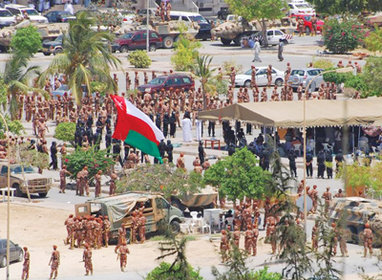
Within hours, details of the incident began circulating online. The matter was even escalated to Oman's Grand Mufti, the highest religious authority in the country for his opinion. Horror turned to outrage very quickly and soon enough busloads of the devout from various parts of Oman arrived at the ROHM to peacefully protest while clutching copies of the Qur'an. On the second evening of protests this past Friday the riot police were sent in to cordon off the area and disperse the crowd.

After the protesters refused to leave, arguments with security forces soon escalated to violence. The photos that have been circulating online this week show pious Omanis with blood trickling down their faces clutching their Qur'ans. Other photos show them being loaded into buses on their way to an undisclosed detention centre. Not a pretty sight.

If you are new to the Muslim world, you're probably baffled and wondering why this was an issue in the first place. You might even be thinking the whole incident is ridiculous.

Let me enlighten you. Many parts of Oman are still very conservative and we take our religion seriously. Reciting verses from the Quran during a musical performance is an offence to many who feel it violates the sanctity of our holy book. Because all residents in Oman fully respect this, such incidents are extremely rare. Therefore, when an incident does occur we are unable to deal with it. It is outside our comfort zone. To be honest, even I would have felt extremely uncomfortable had I been in the audience at the time.

As a Muslim woman born and raised in a conservative family, I fully understand why so many Omanis were furious and felt the need to go out and protest. On the other hand, there are many of us who can also see that the Muslim band member had no intention of offending anyone. In fact, he probably thought we would be delighted. As far as I'm concerned, the whole issue is a complete misunderstanding that should have been forgotten the next day. I am a great fan of the Royal Opera House and don't see for the life of me why they were being blamed for the incident, or why blame is needed at all!

However, a couple of other things have been bothering me. As many of you know, Oman restricts freedom of assembly both in law and in practice. Any public gathering of ten or more people requires government approval. As ridiculous as this law may seem, authorities have taken it very seriously after the Arab Spring protests, hence the dozens of Omanis serving jail time right now for 'illegal gathering'. (PS: this law exists in many countries)

Laws aside, Oman is a Muslim country. From a human rights and religious perspective, those protesters had every right to speak out. They may have broken a controversial law, but they were only expressing what they felt was their love for Islam and did not constitute a threat to this country's security. The photographs of the clashes with the riot police were extremely disturbing and do nothing for Oman's image in the international human rights arena.

There is one other issue that I find a little worrying. Delicately put, Omanis in general don't seem to be getting worked up about the right things. They could have been out on the streets protesting against drugs, rape, female genital mutilation, or even the horrifying reports of sexual and physical abuse of medical interns at local hospitals that were brought to light last week. Are we turning a blind eye to serious issues taking place in our country that are more deserving of our attention and action?

I know it's horrifying to some for a woman to be expressing her opinion so bluntly on such a sensitive issue. Nevertheless, it is only expected for opinions to vary and I am entitled to my opinion. On a final note, I think last week's incident is yet another healthy lesson for Oman that open dialogue and free speech are needed in order to bring issues out into the open and work our way towards a better future. Your thoughts?

Wednesday, February 27, 2013

Two Years Later

Published February 26, 2013 - Muscat Daily
February 25 marked the second anniversary of the eruption of Arab Spring protests in Dhofar, the southern region of Oman. Protests in Muscat, Sohar, and other areas of Oman started earlier, and by the end of the first quarter of 2011 almost every major town in Oman witnessed some form of demonstration or peaceful sit-in.
.
Compared to other Arab Spring countries, the Omani protesters had no interest in bringing down a regime. Their main concerns revolved around creating jobs, higher minimum wage, and better living conditions. Other demands included more freedom of speech, less government control over the media, political reforms and the removal of several key government officials.
 .
Unlike other countries, authorities' initial reaction to the protests was to quietly receive the written demands, study them, and initiate immediate changes. Within weeks the cabinet of ministers was reshuffled, ministries were dissolved, several key officials were fired, 50,000 jobs were created, minimum wage increased, new legislative powers were granted to our version of parliament, and other major changes took place.
 .
These instant reforms may not have solved the real underlying issues but they were a smart and quick solution to maintaining some form of stability within Oman as regimes collapsed around us and violent protests swept through the Arab world. The Omani protests continued for about four months.
.
Despite the quiet and peaceful nature of the majority of sit-ins, several of them ended rather violently with an army crackdown. In Dhofar the protests ended abruptly in May 2011 after the army moved in to the main sit-in area and arrested several hundred protesters over a period of two days. Some surrendered peacefully and others who clashed with army officers were subjected to tear gas and batons.
 .
In Dhofar most of the protesters spent around nine days in prison whereas a handful of the main organisers spent over 50 days behind bars. Similar scenarios took place in other areas of Oman as well.
 .
Looking back it really is quite remarkable to think that Oman went through a rough patch at all! Those difficult few months aren't really discussed in public anymore. Until 2011 Oman had been viewed internationally as a quiet and peaceful country. In fact, several international newspapers referred to Oman as a 'sleepy' nation.
 .
Despite having gone back to a perceived semi-sleepy state, don't be fooled. The aftermath of the Arab Spring protests continues to affect Oman. Despite enjoying more freedom of speech after the protests, a major crackdown on bloggers, writers, and activists started last June. Charges included defamation, instigation, spreading of rumours, and lèse majesté . Many of them are currently serving one-year prison sentences, and nearly two dozen went into an organised hunger strike in prison that ended earlier this week.
 .
Along with many other Omanis, I feel the arrests and exaggerated prison sentences may have come at a wrong time. Our old wounds have not yet healed. Furthermore, these recent events have caught the attention of major international human rights bodies.
.
In all cases, today's column isn't about the aftermath. I simply wanted to reflect on the events of 2011. It was an important time in the history of this country. Some remember it as a time of courage whereas others like to pretend it never happened. Some believe the protests were justified, and others feel Omanis were simply demanding more spoon-feeding from our paternalistic government. Some believe the excessive use of power to end the sit-ins was uncalled for, whereas others feel the protests had gone on for too long.
 .
It was a difficult time for Oman, but nevertheless a learning experience for both authorities and citizens. The quick solutions didn't satisfy everyone. There remain concerns over succession, corruption, legislation and freedom of expression, but those discussions will take place sooner or later. Real change doesn't happen overnight.
 .
On a final note it is worth pointing out that despite the problems, Omanis remain fiercely loyal to His Majesty Sultan Qaboos bin Said. Even throughout the difficult months of protests, those demanding reform were very careful about criticising our beloved ruler in any way. This key element is what distinguished Oman from other countries that experienced the Arab Spring. With that behind us, what does the future hold?

Tuesday, January 1, 2013

The Issue of FGM in Oman

Published January 1, 2013 - Muscat Daily

A year and a half ago I wrote a column titled ‘Woman with an incense burner’ where I tried as delicately as possible to highlight the issues concerning female genital mutilation (FGM) in Oman, and Dhofar in particular where the practice is still very common.

The feedback I received from readers and acquaintances was overwhelming. Most of them expressed how horrified they were to learn this tradition was still going strong in Dhofar. Some advised me to tread carefully, whereas others told me to keep spreading awareness.

Naturally, I also received plenty of negative feedback from relatives and colleagues claiming I was hanging Dhofar’s dirty washing for the world to see and criticising a practice that they believe is purely Islamic. I paid little attention to these criticisms because I know the practice is harmful and primitive.

It was my intention to write today's column in February to mark the International Day of Zero Tolerance for FGM. However, a little over a week ago the United Nations General Assembly passed a historic resolution calling for an FGM ban in all countries. What does this resolution mean for Oman?

Although FGM is banned in hospitals in Oman, in Salalah for example the woman with the incense burner still roams the halls of the maternity ward at Sultan Qaboos Hospital chopping up newborn girls' genitals at their mothers' request. The nurses and doctors know she exists, yet they turn a blind eye. Other women take their newborns to older women in the tribe who perform it quietly then pierce the baby's ears at the same time to make sure people think the baby's howling is caused by ear pain

Should the government pass a legislation immediately banning the practice in Oman? Not necessarily. Introducing a new law before spreading awareness is a recipe for failure. The subject is still very taboo and is not even discussed in private, let alone in public. The first step is to bring it out into the open. In such a conservative society, this can prove to be quite a challenge.

One must also take into consideration the fact that women have been carrying out this tradition for hundreds of years. I mention women specifically because it is my understanding that most men are kept in the dark about this practice. In fact, several men who were willing to discuss it with me explained how horrified they were to discover their daughters had been circumcised. In the north of Oman I believe it's more of a paper cut. In the south, the practice is more brutal and involves chopping off part of or the entire clitoris.

Although locals wholeheartedly believe the practice is healthy and obligatory in Islam, our religion neither encourages the practice nor condemns it. Information explaining why it's harmful to the child is not readily available to mothers. I blame the Ministry of Health mainly for this. I have spent enough time in maternity wards to know that the ministry is doing next to nothing to spread awareness. Women are terrified of what will happen if they do not circumcise their daughters, and by keeping silent the ministry is feeding the belief that the practice is healthy. Perhaps they think that by ignoring it the practice will go away?

It is worth noting that the MOH five-year 2006-2010 health plan included the need for studying the prevalence of FGM in Oman with plans to design awareness programs. To date, none of these plans have come to light, and goodness knows whether combating FGM is on the current agenda. The ministry's website is either very outdated or the current five-year plan has yet to materialise.

Assuming I were the Minister of Logic, I would encourage the Ministry of Awqaf and Religious Affairs, the Ministry of Social Development, Ministry of Health, and Ministry of Education to collaborate in launching a nationwide campaign to spread awareness among Omanis.

The walls of maternity wards across Oman should be plastered with awareness posters explaining the dangers of FGM. Mothers of newborn girls should receive an awareness kit including a booklet about FGM with a message from the Ministry of Awqaf and Religious Affairs confirming it is not obligatory in Islam. There should be health officials visiting maternity wards in the country to talk to mothers of newborn girls.

Continuing to ignore the practice will not look good for Oman. Our country has already made headlines in the international human rights arena too many times than is good for us in the past couple of years since the Arab Spring protests in 2011. Our reputation when it comes to freedom of speech and assembly is already tainted. Do we need to see more embarrassing reports concerning Oman's unwillingness to address the issues concerning violence against women (i e FGM)? With the new UN resolution, people will be watching Oman carefully. I say it's time for some action. What do you think?

Tuesday, June 19, 2012

War on Bloggers


The past fortnight has been an unsettling one for bloggers, writers and activists in Oman. On June 4, a vague statement was released by the Public Prosecution announcing that the number of 'insulting' and 'negative' posts on local blogs and online forums under the pretext of free speech was on the rise. The statement went on to say that anyone caught engaging in such activities and spreading rumours that affect national security will be prosecuted.

A few days later, another statement confirmed that a number of bloggers and activists had been arrested for their online activities and that Omani authorities would not tolerate anyone who uses online platforms to insult, provoke and spread rumours.

The statements make no sense unless you understand what triggered them. Unfortunately though, the powers that be aren't really good at sharing information. After doing a little research through the grapevine, I now have a general idea of who was arrested and why. Regrettably, I can't share that information because then I would be committing the crime of - heaven forbid - spreading rumours!

What I can say is that on June 6, an odd piece was published in a local newspaper confirming that people were spreading negative rumours about our beloved head of state online. That type of criticism is taboo and we all know it.

Another disconcerting interview with the public prosecutor confirmed that they are keeping a watch on all social media platforms in Oman and that bloggers may spend up to two years in jail because the law is clear about such crimes. I tend to disagree. The law is not clear. What exactly constitutes negative writing or rumours? When the government doesn't share information with the public, everything becomes a rumour. As a blogger, I found the recent announcements vague and a little intimidating.

If the authorities are going to go around arresting bloggers for their writing and denying them immediate access to their lawyers, then perhaps they should elaborate more on the fine lines between criticism and insults according to the Omani law. Those of us who value freedom of expression but who are not interested in breaking the law would like to know. In the words of a blogger friend of mine, “How can you threaten people with jail/fines without explicitly setting out what the boundaries are?”

Media publications and the Internet in Oman have always been censored. The protests last year sparked a national discussion about ways to improve this country and handle corruption. For a while, it looked like we'd cracked some major censorship barriers, but now it seems we're back to square one. The days of going out into the streets to demand the removal of key government officials by name are over!

The Public Prosecution announcements were followed by an explosion of debate in the Omani blogosphere. Most bloggers openly condemn the arrests. Naturally, we've also made international headlines this week. A statement from Freedom House last week described the situation as ' a worrying indication of the deteriorating conditions for freedom of expression in Oman'.

Human Rights Watch called this flood of arrests 'A campaign of intimidation' and Amnesty International referred to it as a 'blatant attempt to stamp out freedom of speech'. Rather embarrassing for Oman, don't you think?

Do I believe it's okay to post offensive content online? No. Do I think the heavy handed approach by authorities is going to work? Not really. So what's next? Are they going to pull a Syria on us and block social media platforms altogether? You can't silence people. Not after last year.

I care deeply for my country and its stability. I also believe in the validity of human rights. In the end, freedom of expression is a fundamental human right. If the government chooses to ignore that in order to maintain stability within Oman, fine; just educate us first about the law and about our rights. A little transparency goes a long way!

Tuesday, March 27, 2012

Women's Rights in Oman

Published March 27, 2011 - Muscat Daily. Click here to view the article.

Following my column two weeks ago on International Women’s Day, today I'm tackling something closer to heart… women's rights.

Oman has been a pioneer in the Gulf when it comes to women's rights. His Majesty the Sultan has worked hard to guarantee equal rights and opportunities for women. Forty years ago there were no schools for girls in Oman. Today, there are more women than men enrolled in institutions of higher education. Our participation in the labour force is also increasing on a daily basis.

However, like most countries we have our issues when it comes to women. Although the Basic Law of Oman prohibits discrimination on the basis of gender, women still face legal discrimination under the personal status law of Oman.

It's a sore subject because Oman's interpretation of the Islamic Sharia law is what controls the personal status law in all matters related to marriage, divorce, inheritance and child custody. I have great respect for the Sharia law, but I think people should have a choice.

It bothers me that it’s legally possible in Oman for any male member of my family to marry me off without my consent. No woman I know in Dhofar has ever signed any marriage papers.

The men of the family ‘arrange’ it all. It’s also irritating to know that a husband can grab two strangers off the street and make them sign a divorce document in court as witnesses. The court doesn't even bother to make sure the woman gets a copy of the divorce paper.

It’s legally possible in Oman for a man to divorce his wife with two witnesses, then go home and pretend nothing happened. Who's going to tell her? There are definitely gaps in the system, and according to my sources some practices tend to vary by province.

The reason this issue isn’t discussed publicly is because very few men abuse their privileges when it comes to marriage and divorce, but that does not in any way justify these discriminatory practices.

As far as I'm concerned, every human has the right to be in control of their own life. Obtaining a woman’s signature on her marriage and divorce papers should be mandatory.

Another issue that drives me up the wall is that a man can legally take on an additional wife without informing his first wife. I know for a fact that many men abuse this right. The personal status law of Oman is very vague about polygamy.

It only specifies that a man should treat all his wives equally. It also bothers me that inheritance laws of Oman discriminate against women. Again, I think people should have a choice.

Several international human rights' reports state that women in Oman are legally restricted from travelling abroad without the permission of a male relative. From my experience, I know this is not true.

However, according to my humble knowledge, a male relative can stop a woman from leaving the country if he wishes. I have searched high and low but cannot find a legal document confirming this. If you know anything about this, please share.

Yet another sore subject is marriage to foreigners. It is nearly impossible for an Omani woman to marry a foreigner. There are seven billion people on this planet, but my country tells me I'm only allowed to marry one of the several hundred thousand men who hold an Omani passport.

In the rare case where approval is granted, the woman faces an even bigger battle involving child custody and the ability to sponsor her own kids in Oman. The ironic part is that if you have a child from an 'unknown father', then that child automatically gets citizenship. What is wrong with this picture?

It is worth noting that Oman is one of the very few remaining UN members that has not fully ratified the UN Convention on the Elimination of All Forms of Discrimination Against Women (CEDAW).

Oman presented a report to CEDAW in October 2011 but stipulated reservations on several issues including women’s right to move freely, granting nationality to children with Omani mothers, and other CEDAW provisions that are not in accordance with Sharia laws.

There are a few other issues that I would like to highlight, but I’m running out of space. Stay tuned for another feminist outburst!

Tuesday, February 28, 2012

Lest We Forget : Anniversary of the Dhofar Protests

Published February 28, 2012 - Muscat Daily. Click here to view the article on the website.

This week, the people of Dhofar are quietly observing the first anniversary of the protests that erupted in Salalah on February 25, 2011. It's hard to believe that a year has gone by since the day protesters marched through the centre of town with banners demanding reform.

They set up huge tents and a stage in the Minister of State's parking lot in central Salalah, where they remained for 77 days. The parking lot – nicknamed 'Freedom Square' – became the centre of attention during those months. Hundreds of people from all walks of life visited the sit-in on a daily basis to talk about a new Oman.

On Fridays, thousands flocked to the square to listen to the widely anticipated Friday sermons. Temporary food kiosks and water facilities were set up to cater to the needs of protesters, and donations were pouring in on a daily basis to help provide meals.

Dhofar wasn't the only province that suffered from Arab Spring fever. Despite very little media coverage in most local newspapers, protests were erupting all over Oman.

After negotiations took place between sit-in organisers in different parts of Oman, a final list of demands was delivered to the palace and then printed on a large banner and fastened to the Minister of State's main gate in Salalah.

The long list included demands for better economic conditions, more jobs for Omanis, freedom of speech and an end to government corruption. During those difficult few months, the government worked through the list in a remarkable and efficient manner.

Royal Decrees were issued on a semi-daily basis announcing jobs, benefits, a new public university, legislative powers for Majlis A'Shura (the closest thing our politically immature nation has to a parliament) and many other major changes.

Unfortunately, the sit-in didn't end peacefully in Dhofar. By the end of April, many satisfied protesters had gone home, but a couple of hundred who were hoping for more change continued with the sit-in. By then most of the major demands had been fulfilled, and the rest were either unrealistic or required more time.

On the evening of May 12, all hell broke loose in Salalah when the army arrived and aggressively took over the square. All communication services were shut down in Dhofar during the raid and several hundred men who happened to be in the square at that time were arrested and taken to the local prison.

Nearly a dozen key speakers and activists were plucked out of the square by helicopter and taken to a prison facility up north, where they remained for over 50 days.

Unfortunately, I was near the square at the time and had my precious Nikon D90 confiscated by the ROP after foolishly trying to get a shot of locals clashing with the army at the entrance to the square. After being interrogated and forced to wait in my car for nearly two hours, my camera was finally returned to me and I was allowed to leave.

The next morning, supporters flocked to the square and formed another quiet sit-in to demand the release of their friends and relatives from prison. A friend of mine managed to get onto the roof of a nearby building and snap photos of the army during their second raid.

Sometimes I look back at those photos and think to myself, “Did this really happen? How very un-Omani.” For weeks afterwards, the army presence remained strong in central Salalah. They finally withdrew just as our busy monsoon tourist season was starting.

To this very day, most locals frown upon the excessive use of power that ended the peaceful sit-in in Salalah. After all, it really was nothing more than a large communal debate in a parking lot over thousands of cups of tea.

Regardless of what happened, I think the Omani version of the Arab Spring is something to be proud of. Our uprising was a good example of how a nation can work together to create positive change…peacefully. It was liberating and very healthy for us.

At the height of the Arab Spring drama in the Middle East, several renowned international media publications had the audacity to compare the situation in Oman to places like Egypt and Libya. Only those of us living here knew how ridiculous these allegations were.

The situation here was completely different. People wanted economic reform. There was no rebel party and no one was trying to bring down a regime. Omanis wanted to voice their opinions and be heard.

Looking back now, I think one of the main lessons we learned as a nation is that public dialogue is not a crime. Standing up against corruption is not a crime. Challenging the status quo is not a crime.

During the past year we've broken boundaries that many of us never knew existed. The fact that I can discuss this in a local newspaper is quite something! I'm proud of the protesters for speaking up on behalf of all of us. Without them, tens of thousands of people would still be without jobs and none of these incredible changes would have taken place.

I'm also proud of how the government and His Majesty Sultan Qaboos bin Said handled the messy situation. Excluding those few days of chaos in Sohar, the Omani uprising was peaceful.

Looking forward, one thing is clear to me; with freedom comes responsibility. We can no longer be referred to as a 'sleepy nation.' The only way forward is hard work and dedication.

Tuesday, January 3, 2012

Things We Don't Talk About

There is a young Nepalese housemaid who works at a house down the street. Every morning she’s outside scrubbing the cars of the lazy young men who live in the house. At noon she’s outside hanging laundry. In the evening she’s dragging garbage bags to the communal garbage bins. She always looks tired. I’ve been watching her for over a year.

Last week, one of the young men in the family drove up to the house with a carload of groceries. He lit a cigarette and settled down onto the front steps to supervise her as she carried heavy bags and boxes of bottled water into the house. On her fourth or fifth trip, she tripped and dropped a sack of onions on the steps. He shoved her and shouted something at her. She nodded, picked up the stray onions, and carried the sack in.

Like many of her South Asian, Southeast Asian and Ethiopian counterparts in Oman, she probably works over twelve hours a day doing all the housework and taking cake of the family children. She earns a mere RO30 or RO40 Omani riyal a month. At the most, she’ll earn  RO 60. Sometimes her employer won’t pay her salary for months at a time.

She is probably verbally abused regularly and in some cases physically and sexually abused as well. Her employer is guaranteed to have her passport locked away, even though it is now illegal in Oman (What’s the point though when there’s no penalty?)

She was probably deceived into coming here by a greedy agent who had her sign a phony contract promising double or triple what she’s making now. Her employer won’t let her leave until she’s paid back her employment visa charges. Assuming she earns 50 OMR a month, it’ll take her over a year to pay the amount back in order to regain her freedom again.

The whole scenario above has ‘Human Trafficking’ written all over it. Unfortunately, many Omanis don’t see it that way. In fact, I don’t think most of them have ever heard the term ‘human trafficking’ before and have no idea how serious it is.

I am a proud Omani, but the general attitude among locals here towards South Asians & Southeast Asians makes me sick. I’m using housemaids as an example only. The same applies to construction workers who have built this country block by block (literally) and other low-skilled laborers. Whenever I try to discuss this with colleagues or friends, they claim that the abuse of migrant laborers is worse in other GCC countries and that laborers are better off in Oman. As if that justifies ill-treating another human being!

In 2007 the US State Department's Annual Trafficking in Persons Report pushed Oman down to Tier 3, the lowest rating on the human trafficking index. This embarrassing rating wasn't because the situation here was terrible but rather because we didn't appear to be doing anything about it.

Furthermore, international human rights monitor groups weren’t able to operate in Oman to the best of my knowledge, and that didn't look too good for us either. After it became apparent that Oman was still down in Tier 3 in 2008, the government publicly rejected the report then hastily set up a National Committee for Combating Human Trafficking (NCCHT) as well as the National Human Rights Commission (NHRC). This placed us back in Tier 2 during 2009, 2010 and 2011. Tier 2 basically means we're not complying fully with minimum standards to eliminate human trafficking; however, we're making significant efforts to do so.

The NCCHT's website is informative and it provides hotline numbers for reporting cases of human trafficking. The site also enables you to download the National Plan for Combating Human Trafficking in Oman. That’s a good step in the right direction, but what about spreading awareness among Omanis? Employment agencies aren’t the only culprits in this battle.

The aim of this column isn't to criticize government policies, per se, but rather to address the issue from a human perspective. Nearly sixty years ago my father’s family lived in a cave in the mountains of Dhofar. My grandmother was out with the animals from sunrise to sunset. Like most Dhofaris living in the mountains at the time, every day was a struggle to find food and water. Today, almost every single Omani household has one or two maids whom they treat with very little respect. What went wrong along the way and when did we stop being humble?

Something I find quite interesting is that Oman was one of the very last nations on earth to abolish slavery in 1970. It's incredible to think that people who actually owned slaves are still alive today. I mention this because perhaps in some way this is linked to how many Omanis view and treat their domestic help, and why they feel the need to have them in the first place. Naturally, slavery is a taboo subject that no one discusses in public here.

I know it’s not fair to generalize because there are plenty of really great employers who treat their labourers as humans. By employing help Omani families are indirectly supporting immediate and extended family members in their employees' respective countries. However, that does not by any means justify low wages, forced labour, threats, blackmail and confiscation of passports..

This is just the tip of the iceberg, and the situation is far more complicated than anything I can fit into one column. Oman has made great progress in the past 41 years, but most Omanis remain uninformed about issues related to human rights.

As a young Omani who cares very much for her country, I'd like to see more awareness campaigns in public schools about human rights. Kids need to learn from a young age how to treat people of all backgrounds with dignity and respect. I'm tired of seeing neighborhood kids throw rocks at the municipality workers who collect garbage from our streets.

Just yesterday, it was announced that His Majesty Sultan Qaboos bin Said has advised the Ministry of Education to increase the number of Islamic studies classes in schools. Since basic human rights are extremely relevant to the peaceful message of Islam, perhaps the new curriculum can include more basic human rights teachings. This country needs it. Food for thought….
 
Published January 3, 2012 - Muscat Daily

PS (due to some nasty comments, let me clarify one thing: my family does not employ a housemaid. We do our own housework and take our own garbage out ..... pretty scandalous, huh?)

Sunday, August 14, 2011

Free Omani Journalist?

Interesting article on the cover of Muscat Daily this morning. 
Paris-based watchdog Reporters Without Borders (RSF) has appealed to Oman to release a journalist on trial over an article he wrote alleging corruption in the Ministry of Justice.


RSF said it 'has written to His Majesty Sultan Qaboos (bin Said)... expressing deep concern at tomorrow's (Sunday's) trial of Yousef al Haj, a journalist with the Muscat-based daily Al Zaman, as a result of a complaint by the Minister of Justice Sheikh Mohammed al Hinai about (an) article published on 14 May’.

Haj was charged with 'insulting the Ministry of Justice, insulting the Minister and his Undersecretary, trying to create divisions within Omani society, violating article 60 of the civil code (the publications law) and working as a journalist without a permit', RSF said.

I know he was banned from writing, but I had no idea he was in jail (releasing him means he's arrested, right?).  I don't believe in openly accusing someone without all the facts, ... but also I am disappointed in the government's reaction to Yousef's column. If anyone has a link to the article he published on May 14, please pass it along.

Tuesday, June 28, 2011

Salalah Meets Washington


Published June 28, 2011 - Muscat Daily

( I wrote this while in transit at Frankfurt Airport last week. Humour me, will you?)

It's 5am in Frankfurt and I have not slept for two days. After combing the airport for nearly an hour in search of decent coffee, I finally found this café. There is a lot of bustle and activity despite the early hour, and the huge monitor above my head tells me my plane doesn't take off for another four hours.

I'm on my way home after spending an incredible week on the US Foreign Press Centre Tour on blogging/writing for social and political change that took place in Washington DC and Minneapolis. In other words, and despite severe caffeine deprivation, life is great and all is well in my world.

A couple of months ago I was contacted by the US Embassy in Muscat asking if I would be interested in participating in the tour, based on my work for this column. Candidates were selected from countries that are currently struggling with social and/or political tension. Never one to turn down an interesting opportunity, I agreed immediately.

Upon receiving the final list of selected participants in May, I knew it wasn't going to be an ordinary tour. The 19 people who would be joining me represented China, the Philippines, Indonesia, Pakistan, Afghanistan,Kyrgyzstan, Kazakhstan, Armenia, Turkmenistan, Portugal, Germany, Morocco, Bahrain, Jerusalem, Iraq, Bahrain, Zimbabwe, Uganda, and Kenya. When I first saw the list, I couldn't believe I would be spending an entire week with such a wide mix of nationalities. Their impressive biographies were intimidating, but once I got to know them, I knew I'd made friends for life.

Our Washington leg of the tour involved meetings with officials at the State Department, employees at the Foreign Press Centre, NGO representatives, bloggers, journalists and activists in Washington. We then moved on to Minneapolis where we were invited to meet with professors and students at the University of Minnesota's Journalism Centre. We also took part in Netroots Nation, a political convention for American progressive political activists.Being involved in the world of American politics, if only for a few days, was quite the experience, especially for those of us who come from countries where political activism is almost non-existent. The theme at most of our meetings was the use of social media in invoking political and social change.

All the roundtable discussions gave us the chance to see things from the Americans' point of view, in addition to hearing what my fellow participants had to say on the current situation in their respective countries. Our understanding of US government policy regarding civil society initiatives, democratic reform, and Internet freedom has definitely increased.

Our tour was jam-packed with meetings and appointments, with barely enough time for sleep, let alone sightseeing! However, I have nothing to complain about. The FPC were wonderful hosts, and we met some incredible people from all walks of life over the course of those five days, starting with very senior officials at the State Department and ending with homeless musicians and Amish vendors at the Minneapolis Farmers' Market. If you've never heard of the Amish people, I advise you to look them up online immediately, if not sooner.

Apart from writing about the recent political unrest in Salalah, my interests have always leaned more towards social issues and women's issues in Oman. However, after the tour and with the Oman Shura Council elections coming up, I confess I find myself intrigued by the world of politics.

Social media has forever changed the face of politics in the US, and I'm sure, in the years to come, the same will be true for Oman. Judith McHale, the Undersecretary of State for Public Diplomacy and Public Affairs, said something to us on our first day that kept coming up again and again in our official and private discussions for the remainder of the tour. She said, “The days of one-to-one government relations are over.”

Thinking about it now, what she said was very true. With online social media tools and websites like WikiLeaks available to hundreds of millions of people around the world, it will become increasingly difficult for governments to withhold information from their people.

Politics and social media aside, I think the most valuable lesson I learned from this tour was to sit back and listen to the world speak, literally. We often get so absorbed in what is happening in our own countries that we neglect to take an interest in world affairs. Our tour brought together activists and writers from 20 countries with nothing in common but an Internet connection and a passion for creating positive change.

After listening to first-hand accounts of the horrors that face my fellow participants in places like China, Zimbabwe, and even our neighbour Bahrain, I was truly humbled.

Overall, the tour was an eye-opener for me and I am bursting with new ideas. Oman may not seem like the most democratic of nations, but we are pretty stable and are definitely on the right track. We have more freedom of speech than we think and we have much to be thankful for. I left the US feeling inspired, empowered, and extremely proud of my country. I honestly feel blessed to be living in Oman. You should be too.

Wednesday, June 22, 2011

Washington D.C

                                             (photo taken on steps of the Lincoln Memorial in D.C)
In April, I received an email from the US Embassy (Muscat) asking if I'd like to participate in a Foreign Press Centre (State Department) sponsored tour for writers/bloggers in Washington D.C in June. Never one to turn down an interesting opportunity, I agreed and a few weeks later heard I'd be accepted into the program along with 19 amazing writers and activists from around the world. I spent the whole of May doing background reading and researching every possible related topic and finally I packed my bags and boarded that Oman Air flight out of Salalah on June 11th. The tour was I.N.C.R.E.D.I.B.L.E and I will be writing a lot about what I learned once I get over the jet-lag (believe me, you do not want to see my face after 55 hours of travel and no sleep). Nevertheless, I thought you should know that I will no longer limit this blog to my newspaper columns and articles. After the intense intellectual stimulation of the past week, I've decided to blog more regularly. I'm literally bursting with ideas. Thank you Department of State and US Embassy Muscat!

Wednesday, May 25, 2011

The End of a Chapter

Published: May 24, 2011 - Muscat Daily
/
The past two weeks have been extremely puzzling for those of us living in Salalah. On the evening of May 12, I hit the runway at exactly 8pm after a relaxing couple of days in Muscat and the first thing I noticed was that I had no phone reception. It dawned upon me that something was horribly wrong when I stepped out of the airport and saw helicopters hovering over central Salalah.
.
I knew immediately it had something to do with the peaceful sit-in that had started in February. The main highway was blocked by ROP officers and the whole centre of town seemed to be surrounded by armed forces. I was stuck in traffic for over an hour and unable to contact anyone in my family.
.
Once the phone network was up two full hours later, there was a burst of phone activity as people called each other to report what they had seen and heard. It was later revealed through the grapevine that several hundred protesters had been arrested at the sit-in area and that several key speakers had been plucked out of the square via helicopter and taken to goodness knows where up north.
.
More people were arrested the following morning, and finally the group was taken to a prison facility just outside Salalah, where they remained for nine days.
.
As a young woman who wasn’t necessarily with or against the protests, I have mixed feelings about the whole thing. On one hand, I felt the sit-in had gone on for too long. I’m not denying the fact that without these men, none of the huge changes would have materialised in Oman. Without the protests that had taken place all over the country since February, over 50,000 people would still be without jobs, and families on welfare would still be living on next to nothing.
.
We’ve seen so many Royal Decrees and positive changes in this country lately, and we have our young men to thank for speaking up, and His Majesty Sultan Qaboos bin Said most of all to thank, for listening.
.
I think the remaining demands on their long list require more time and I honestly believe the protesters should have ended the sit-in voluntarily towards the end of March.
.
On the other hand, I also have mixed feelings about the army intervention plan. For ten weeks, I had been watching the sit-in from my office window, and I honestly still do not understand why it was brought to an end with such excessive use of power. Detaining several hundred people without charges for nine days doesn’t speak well for Oman’s justice system.
.
It’s been nearly two weeks, and the armed forces are still occupying the square where the sit-in had taken place. For the first week after the arrests, there were army tanks lining the main road, and soldiers at every corner. I had to go through three checkpoints in order to get to my office, which is conveniently located right next to the square.
.
I kept on hearing the same sentence again and again from my friends and colleagues, “There was no need for all this.” I tend to agree, because as far as I’m concerned, bringing hundreds of soldiers, tanks and weapons into Salalah for a bunch of guys sitting in a tent in a parking lot drinking tea and talking about a ‘different’ Oman was uncalled for.
.
I’m saying this because the sit-in remained completely peaceful for almost three months. Zero violence. However, let’s assume for a moment that I’m wrong. Let’s assume they were committing a crime against this country. If those men in the governor’s parking lot really were a threat to security, then surely it’s our right to know why?
.
If there were clear justifications for all the arrests, I think the people of this beautiful country want to hear them. We want to know what the charges were. I believe the sit-in would have died down eventually had the government given them a little more time. The numbers were already dwindling by the time the army came.
.
Furthermore, the secrecy involving the arrests and release of all the prisoners baffles me. The fact that I had to read the Los Angeles Times and Gulf News in order to find out what was going on in my own town is ridiculous. Why wasn’t there enough local media coverage of the recent events in Salalah? Several times over the past two weeks, I’ve had to knock myself on the head to remind myself that this is happening in Oman.
.
I’m horrified at the recent turn of events, as I’m sure many of you are. I hope the armed forces move out of Salalah soon, simply because their presence makes the quiet residents of Salalah nervous, and I pray that the release of all detained protesters from the local prison two nights ago will mark the end of a bitter and embarrassing chapter in the history of this town.
.I’d like to think what happened was a huge misunderstanding and I hope our men give up on the idea of sit-ins for the time being. There are a million other ways to make positive changes, and it all starts from within. God bless our wise leader and God bless the Sultanate of Oman. La fin.

Monday, May 23, 2011

Protesters Freed from Salalah Prison

Many arrested protesters were released from Arzat Prison in Salalah yesterday afternoon nine days after their initial arrest on Thursday (May 12). All those arrested were linked to the peaceful sit-in that started on February 25 in central Salalah opposite the Governor of Dhofar's main headquarters, nicknamed 'Freedom Square'.
.
Participants in the sit-in, which had remained peaceful for over ten weeks, were demanding among other things better wages, more benefits and for former corrupt key government officials to be put on trial.
.
On the evening of May 12, army officers entered the sit-in area in central Salalah and arrested all protesters. Helicopters that were seen hovering over the square airlifted a small group of the key speakers to an undisclosed prison facility in the north of Oman. Some of them were also released yesterday but the rest remain missing.
.
On that evening, all communication services in the Dhofar region were shut down, causing great confusion among residents. More arrests followed the next morning before Friday prayers. A statement was issued by Oman’s official news agency ONA on behalf of a ‘security source’ on May 12, soon after the operation began.
.
It said, ‘A security source stated that the security and military forces arrested a number of people in the governorates of Muscat and Salalah who were in charge of instigating the public to riot and break public order in a way that forced the authorities to take action. This was to deter them from transgressing the country's law and their endeavours for sedition and demands which are irrelevant to public interest.’
.
Since then, army presence remained strong at many locations in Salalah, including the former protest area outside the governor's office. Security forces had also blocked the highway leading to Arzat Prison late last week following a peaceful sit-in outside the prison by the relatives and supporters of those arrested.
.
Last Monday, tribal sheikhs delivered a letter to the Governor of Dhofar demanding the release of all prisoners and the withdrawal of the armed forces from Salalah. A delegation of tribal sheikhs had been visiting the prison all week, trying to negotiate the release of the detainees without them having to sign an undertaking.
.
According to Ahmed, whose brother was among those released yesterday afternoon, over 350 protesters were being held at Arzat Prison. He said they had been told on Wednesday that they would be released.
.
However, they were delayed for three days without a clear explanation. He also believed that not all the prisoners were released, but he had no way of knowing for sure, since they were being released in small groups of 20 and dropped off at different mosques.
.
Published 22/05/2011 - Muscat Daily

Saturday, May 14, 2011

Operation Salalah

Just after 8pm on Thursday, security personnel blocked the highway and main streets in Salalah while army personnel carriers blocked all roads leading to ‘Freedom Square’. Helicopters were seen hovering over the square and with all communication services shut down at the same time, residents of Salalah took to the streets in an effort to find out what was going on.
.
A statement was issued by Oman’s official news agency ONA on behalf of a ‘security source’ on Thursday evening soon after the operation began: ‘A security source stated that the security and military forces arrested a number of instigators in the governorate of Muscat and the wilayat of Salalah, who were in charge of instigating the public to riot and break public order in a way that forced the authorities to take action.
This was to deter them from transgressing the country's law and their endeavours to spread sedition and their demands which are irrelevant to public interest.’
.
A large number of Salalah residents had abandoned their cars in the middle of the roads on Thursday night to try and reach the protest square on foot. However the army had cordoned off the entire area and no one could get in or out until almost three hours later. Telecom services were back online two hours after the operation began.
h
The first move by the army personnel was to break up the sit-in that has been going on in front of the governor’s office in Salalah since February 25. The protesters were loaded onto buses and taken to the Royal Air Force base. As per reports, the main organisers were taken to Muscat.
After midnight on Thursday, angry supporters pushed past the riot police into the square and started another sit-in demanding the release of their friends.
.
Friday morning saw more arrests when just before noon the army closed in on the sit-in and arrested the gathered people. Things got out of hand after the Friday prayers, when protesters clashed with the army on Al Nahda street by the governor’s office. There were incidents of rock-throwing at the army and tear gas was subsequently used to break up the crowd.
j
Though they dispersed for a while, soon they were back again marching up to the army and this time bullets were fired into the air as warning. A senior security official also came to speak to the protesters over a microphone in Jebbali in an effort to calm them down.
.
Sources in Salalah say that most of those arrested on Thursday night were released on Friday, barring a few of the main protesters. Of those released, some have returned from the airbase while a few chose to remain at the base demanding the release of their friends.
,
However with the protesters refusing to back down, a fresh spate of arrests happened early on Friday evening, with around five busloads of the arrested protesters being taken to Arzat jail in Salalah. Among those arrested is Abu Abdullah (online name) who has been running the Oman Protest discussions on Facebook since March. Sporadic clashes continued well into Friday night and at the time of going to press.
.
Published - Muscat Daily - 14/05/2011  

Tuesday, April 26, 2011

Social Media & Change

It’s been exactly two months since the peaceful sit-in started in Salalah, and our protesters are still sleeping under the stars every night in front of the Governor’s office, waiting for reform. There’s nothing much to report on that front since nothing of great significance has happened over the past few weeks, except for a thousand people who marched through central Salalah on Friday to remind authorities of their demands.The fact that nothing major has occurred is probably a good thing. Why? Well, you can interpret that in any way you like. Let’s look past the protests, sit-ins and political slogans for a moment and shed some light on some of the hidden forces behind our peaceful uprising.
.
It’s been fascinating to watch the role social media has been playing in Oman these past few months. We can no longer underestimate the power of simple Internet tools such as blogs and social networking sites, especially in countries where television, radio and newspaper content are heavily censored.
.
Take Egypt for example, where online platforms like Facebook and Twitter have been credited with helping to propel the revolution and bring down the government. The situation in Oman is definitely not that dramatic (it never is!), since Omanis simply seek to improve living conditions and prosecute a handful of former corrupt government officials.
.
In recent weeks, most Omanis have been visiting local Internet forums, namely the hugely popular Sabla, for real local news and updates from the protests. By real news, I’m referring to all the interesting happenings in Oman that are never published in local newspapers, especially Arabic ones, due to heavy media censorship. For some reason, English newspapers seem to get away with a lot more.
.
Furthermore, the number of Omani Facebook users has increased significantly since the popular social networking site became available in Arabic a little over a year ago. However, according to Internet statistics, the number of users in Oman has almost doubled in the past few months to more than a quarter of a million (up from 120,000 in 2010). People who hardly knew what Facebook was a couple of months ago are now active members.
.
When the protests first started in Salalah in February, I subscribed to several Facebook groups linked to the protests so I could receive updates on my BlackBerry. Since then, I’ve had to stop some of the feeds because it was becoming rather overwhelming. At one point, I was receiving live updates every few minutes, including photos and videos of the speeches that were being given at the protests in Salalah.
.
Social media has provided a platform for Omanis to express their solidarity, both within the country and with others in the region and beyond. For many, the Internet has become the only effective way to get information about the current state of unrest in the country.
.
However, despite the important role social media has been playing in Oman, we still suffer from Internet censorship. In recent weeks, several local blogs have been blocked by regulatory authorities in Oman for criticising the government and publishing leaked documents. In a February article on the situation in Oman, The New York Times mentioned a Facebook group dedicated to the Omani ‘uprising’ called ‘March 2 uprising for dignity and freedom’. It attracted several thousand users almost immediately, but if you look it up today, you’ll notice the group no longer exists. Furthermore, just a couple of days ago, popular local forum Al Harah was blocked as well.
.
The big question is, why? I’m afraid I can’t provide the answers, but I know one thing for sure; media and Internet censorship can no longer silence the truth. Omanis have now experienced what it’s like to voice their opinions and speak freely, so there’s no way it’s going to be taken away from them ever again...at least not without a good fight!
.
Published April 26, 2011  - Muscat Daily

Tuesday, April 12, 2011

Protests in Salalah: Time to go home?

Yes, believe it or not I’m discussing the protests … again. It seems inappropriate to write about anything else when all anyone talks about these days are the sit-ins and strikes that have erupted throughout the Sultanate in the past couple of months. For Dhofar, it all started on February 25th with a small group of men clutching a banner and marching through central Salalah to the Governor of Dhofar's headquarters. Their long letter of demands was delivered to His Majesty the Sultan almost immediately afterwards, and since then we've witnessed a steady stream of royal decrees and major announcements. His Majesty's response to the situation has been nothing short of remarkable.
.
However, nearly seven weeks later the same group of men in central Salalah is still there and the same dusty banner listing their demands remains tightly fastened to the Governor's main gates. Delegations of Ministers, senior government officials, and tribal sheikhs have come and gone but all attempts to end the sit-in have failed. What was formerly known as the governor's parking lot has become the centre for nearly all social and political activity in Salalah. In fact, it's beginning to resemble a communal picnic. In the evenings people from all walks of life gather at the square to participate in the political debates. Every Friday the square witnesses several thousand supporters who come from all over Dhofar to pray with the protesters and listen to the widely anticipated Friday sermon, given by the one of the local Imams who has joined the sit-in. Judging by the crowd that was there a couple of nights ago, it doesn't look like they're going anywhere anytime soon.
.
On the one hand, I don't blame the protesters. For years our politically immature nation has been kept silent by the unwritten rules that everyone understood but didn't necessarily agree with. Challenging the status-quo was a definite no-no, and many Omanis in the towns and villages outside the capital felt they were being sidelined. However, thanks to recent events in countries like Tunisia and Egypt, the greatest achievement for Omanis so far has been freedom of speech. Over the past two months, Omanis have been busy releasing all their bottled up frustrations and anger. I'm sure the exercise has been quite healthy for us as a nation. Once the novelty has worn off, I suppose we'll all calm down and go home, but I hate to think how long it will take.
.
On the other hand, I'm beginning to feel that the situation has been dragging on for too long. At first the idea of our own little revolution seemed terribly exciting, especially to those of us who weren't alive at the time of the Dhofar Insurgency in the 1960s and 70s. However, as the weeks go by I can't help but wonder why the sit-in continues? It's worth noting that there has been no violence at all in Dhofar, and definitely no ROP or military presence. However, despite the peacefulness of the situation, I don't see how camping out in a parking lot for seven weeks is going to push the government any harder. The people's demands are being addressed and their voices have definitely been heard, so perhaps it's time to go home?
.
There's no denying the fact that we have the protesters to thank for the major changes that have taken place in Oman in the past few weeks. For example, without them those 50,000 citizens may still be without jobs, and all those families on welfare would still be living on next to nothing. We're definitely proud of what they have achieved. However, it's time to realize that although all the demands may not be met immediately, we have gained so much more in recent weeks. We can start playing a larger role by being proactive and realizing that protesting isn't the only way to get what we want. I can think of plenty of other ways. How about hard work?
..
Finally, it's important to emphasize again and again that the situation in Oman is most certainly not a continuation of the protests in other parts of the Middle East. All we are asking for is a few policy changes. My prediction is that things may calm down if His Majesty addresses the nation directly. Omanis may have lost faith in the government, but we will forever be loyal to our Sultan. I have no idea where all this is heading, but I am extremely optimistic about the future of this country. Oman has indeed has been a shining example of how to protest peacefully. We have a long journey ahead of us but with hard work and the right attitude, anything is possible

Friday, March 25, 2011

A New Oman

Published Tuesday March 15, 2011
.
Believe it or not, the peaceful sit-in that started in Salalah on February 25th is still happening. Every morning for the past three weeks, I've had to drive through throngs of sleeping protesters and placards demanding an end to corruption in order to get to my office. Meanwhile, a plethora of smaller peaceful protests have erupted at many major institutions in Salalah including the university and colleges. As for the rest of Oman, every major organization seems to be on strike, and everyday I hear of yet another sit-in happening at some ministry or other. Many of the demands seem perfectly logical to me, while others completely contradict the idea of a 'new' Oman. The protest situation may have gotten a little out of hand, but who can blame us? For the first time in decades, we've been allowed to criticize the way this country is run. Discovering that the government will tolerate our protests is unbelievable, but I suppose with recent events in the Middle East they have no other choice. Once the thrill of staging protests wears off, hopefully things will calm down… but then what?
.

.Oman's 'revolution' (the only possible word that can describe the situation) is all anyone talks about these days. Everyday more Royal decrees are issued announcing jobs, benefits, and wage increases. A dozen ministers have been replaced, committees have been set up, and new policies are being formulated. His Majesty's response to the voice of the people has been remarkable. It may be hard to outsiders to understand the deep respect that Omanis have for him but rest assured that we do genuinely love our Sultan. Our loyalty is not part of any government choreography as may have been the case in other Middle Eastern nations. He has undoubtedly guided our country wisely, and the past 40 years have been extremely prosperous for Oman.
.
However, it's time for reform; and by reform, I do not just mean the government. Omanis believe that His Majesty can transform this country from its present state into a democratic country, but I can't help wondering if Omanis are ready? With freedom comes responsibility. We as individuals have to start by slowly changing our lifestyle, attitude towards work, and start taking responsibility for our own lives. We've gotten used to being spoon-fed by our paternalistic government for the past four decades and this has resulted in us expecting the government to solve all our problems. Many Omanis are either too proud or too lazy to take on menial jobs. I'm against issuing a monthly allowance for the unemployed, and I'm also against forgiving all private debts and housing loans. Most Omanis are in debt over huge mansions and fancy cars that they don't even need. We have to start living at our own level of income. If we want the government to help us, we have to help ourselves first. Omanis are not the most hard-working people on earth. We've been spoiled for too long.
.
Problems aside, I feel the need to echo fellow columnist Riyadh's sentiments; the greatest achievement so far has been freedom of speech. That in itself makes every protest worthwhile. In the past few weeks we've broken boundaries that many of us never knew existed. The fact that I’m able to write these very words today is incredible. For the past 18 months I have been practicing self censorship with every column that gets published. The rules are unwritten, but we all understand them. For years, media publications in this country had no credibility, and Omanis would head to internet forums for 'real' news. Quite often, websites revealing such news would be inaccessible. In recent weeks, however, Facebook groups covering the protests have not been blocked, nor have the endless discussions on local blogs and internet forums. Twitter is on fire and the hundreds of videos uploaded onto YouTube are accessible to all. This newfound freedom of expression is exhilarating.
.
There's no denying the fact that we've had 40 prosperous years. The old system definitely had its virtues, but that era is over now. As a nation I think we're ready now to open new page and try something different. These have truly been significant times here in the Sultanate and the major changes aren't even over yet. This is just the tip of the iceberg. As a young Omani woman, I don't know how to react to these changes or what to think. In fact, I don't think anyone knows really. The only thing I know for sure is that Oman will never be the same again, and it sure is exciting to be here to witness it!

Tuesday, November 2, 2010

Remembering Abdullah

Published November 02, 2010
.
Over twelve years ago Salalah witnessed a horrible car accident involving a group of teenage boys driving at an insane speed without seatbelts. Abdullah, one of the accident's survivors, ended up spending six months on a wooden board at the hospital in a failed attempt to heal his crushed spine. When he was finally released in a wheelchair, he knew he would never walk again. After many months of depressed isolation, he rallied, and finished his high school diploma at home. Then he decided he was going to university. He was discouraged by almost everyone, but he chose to fight and went up to Muscat to apply for a scholarship. A senior official at the Ministry told him to give up, claiming someone paralyzed from the neck down would never make it through college. Never one to give up, he kept fighting.
.

He was finally granted a scholarship to study at Dhofar University. I remember the first day his personal helper, Babu, wheeled him through the campus gates, and most students stopped to stare like it was some sort of freak show. Abdullah held his head up high and started attending classes. During those first few weeks, most students avoided Abdullah because, at the time, Dhofaris had no idea how to deal with physically or mentally challenged people. Any person with special needs was kept 'hidden' at home and away from society. The first time I met Abdullah was during registration week at the University. Babu pushed his wheelchair up to a bench where I was sitting and he asked me cheerfully if he could be 'parked' next to me until Babu returned with registration forms. We ended up chatting for an hour, and that was the beginning of several years of friendship.
.
University life was not easy for Abdullah. It took a while for students to get used to seeing him around campus, but after the first few weeks, his classmates started talking to him and once they realized he was a completely normal person, his circle of friends began to grow. He decided to study management information systems since he was able to use a laptop despite the fact that his fingers had been crushed in the accident. He had a pencil with a small rubber attached to one end. He would hook the pencil into his only good finger and use the piece of rubber to hit the keyboard.
.
Abdullah was extremely bright and spent many hours a week tutoring other students. He also became involved in social work and charity campaigns at the University, many of which he himself had initiated! He excelled in his studies and made the Honors List semester after semester even though he had to spend weeks at a time in the hospital every year.
.
He had a charming personality and a wicked sense of humor. His close friends at the University knew how much physical pain he was in even though he rarely showed it. Only he knew what it was like to wake up in the morning and feel completely helpless and paralyzed. To overcome his frustration, he spent his time and energy reaching out to others. When someone passed away, Abdullah was the first at the funeral. When someone was in trouble, he was the first to offer help. Even when my own mother was undergoing surgery in Muscat (at the other end of the country!), he somehow managed to appear out of the blue in the surgical ward with a bouquet of flowers on his wheelchair table and a smile on his face. On our graduation night in 2007, when he was wheeled out on stage to receive his degree, the applause was deafening and every single person in that auditorium was on their feet (many with tears streaming down their faces).
.
Abdullah passed away two years ago today, and even though he is no longer with us, his friends I have vowed to keep his memory alive. He had no idea how much he inspired people, and we all feel blessed to have had someone like him in our lives. He told me once that his dream was to set up a rehabilitation centre in Salalah for people like him. He wanted young men and women with special abilities and needs to have a choice. He took it upon himself to make a difference. After graduation, he spent most of his time trying to make his dream come true.
.
Despite Abdullah's and many other people's efforts, there are still thousands of children and adults with special needs hidden behind locked doors in Dhofar.